Embodied Learning and Its Role in Supporting Indigenous Distance Education

Introduction: Embodiment, Distance, and Indigenous Education
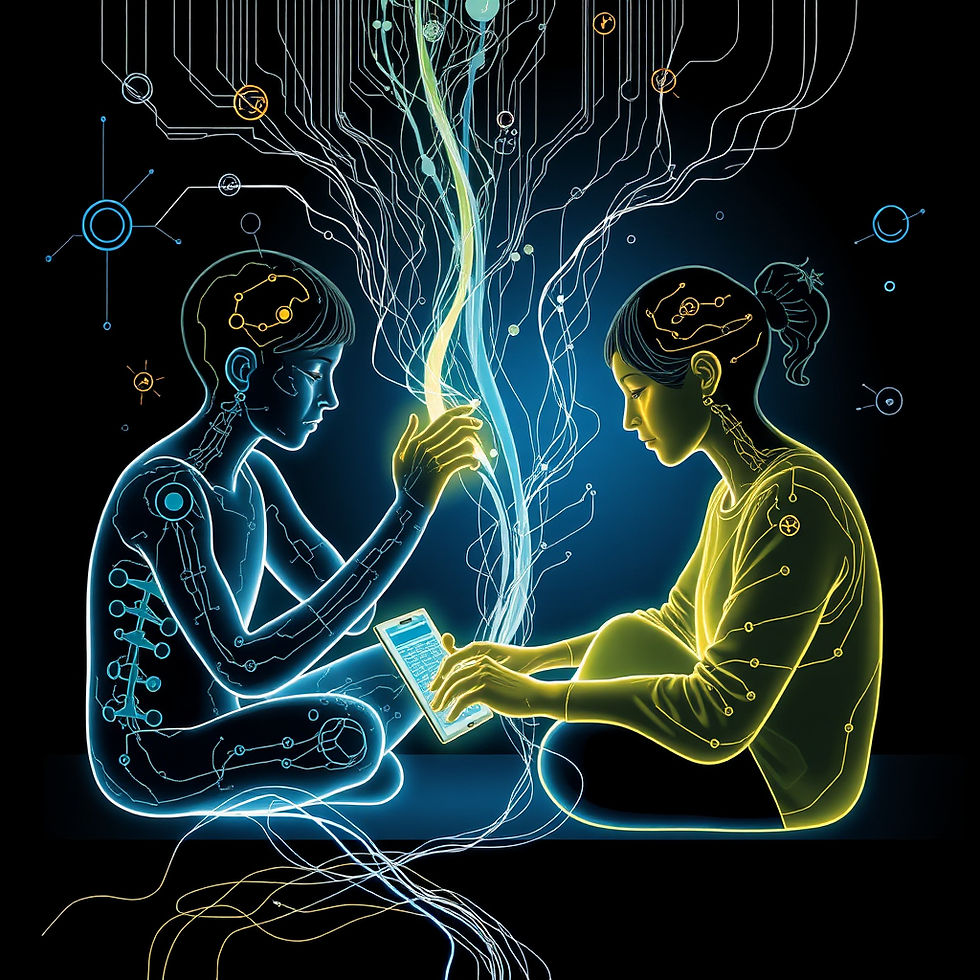
In my work, I do not understand learning as something that can be separated into discrete parts. It has never made sense to treat learning as a purely cognitive activity, detached from the body, from emotion, or from the relationships that shape how we come to know. Embodied learning offers a framework that helps articulate this understanding. It recognizes the interconnectedness of body, mind, emotion, and spirit, and positions knowledge as something lived and experienced, rather than simply read or memorized.
When I bring embodied learning into conversation with Indigenous pedagogies and distance education, it opens important possibilities for rethinking how learning environments are designed. It allows for the creation of online spaces that are more relational, holistic, and culturally meaningful, while also challenging colonial assumptions about what counts as legitimate knowledge and learning. At the same time, it requires a critical examination of the ways that distance education has historically reproduced disembodied and decontextualized models of learning.
In many dominant models of distance education, learning is still imagined as disembodied. Students are positioned as individuals working independently through text-based materials, recorded lectures, and assessment structures that privilege written demonstration of knowledge. These approaches reflect broader Western epistemological traditions that separate mind from body and privilege abstraction over lived experience. In contrast, both embodied learning and Indigenous learning frameworks insist that knowledge is grounded in experience, relational accountability, and connection to land and community.
In this paper, I explore how embodied learning can support Indigenous distance education. I examine how it aligns with Indigenous knowledge systems, how it can enhance accessibility and relevance for Indigenous learners, and how it offers concrete possibilities for designing online learning environments that are not only effective, but also relational, holistic, and grounded in Indigenous ways of knowing.
Embodied Learning: Disrupting the Mind–Body Divide
Embodied learning begins from the premise that experience, sensation, and movement are central to how knowledge is produced and understood. It challenges the long-standing separation between mind and body that has shaped Western educational systems and instead positions the body as an active site of knowing.
From my perspective, this shift is not simply pedagogical but epistemological. Embodied learning expands what is recognized as valid knowledge by acknowledging that understanding emerges through affect, movement, and relational engagement, not solely through abstract reasoning. In doing so, it creates space for ways of knowing that have historically been marginalized within academic institutions, including Indigenous and relational epistemologies.
Practices often associated with embodied learning, such as mindfulness, movement, and creative expression, are frequently positioned as supplementary or supportive. However, within an embodied framework, these practices function as methods of inquiry. They enable learners to engage with knowledge through their full selves and to develop awareness of how learning is experienced within the body and in relation to others.
Embodied approaches also create opportunities for critical and reflexive engagement. They invite attention to how histories of colonialism, trauma, and power are not only conceptual but are also carried and experienced within bodies and spaces. As such, embodiment becomes a way of both deepening learning and interrogating the conditions under which knowledge is produced.
Indigenous Learning: Relational, Holistic, and Situated
Indigenous learning frameworks are inherently relational and holistic. Learning is understood as a process that involves the physical, emotional, mental, and spiritual dimensions of life, and knowledge is generated through relationships with people, land, and the more-than-human world.
In my understanding, Indigenous education is grounded in relational accountability. Knowledge is not something that can be extracted or possessed; it is something that is carried within relationships and comes with responsibilities. Learning is therefore not only about acquiring information, but about understanding one’s role within a network of relationships that includes community, ancestors, and future generations.
Story, oral tradition, and experiential engagement are central to this process. Knowledge is transmitted through lived experience, through participation, and through careful listening and observation. Land is not a passive setting for learning but an active teacher and relation. Land-based practices such as harvesting, ceremony, and community engagement are not supplementary to learning; they are foundational.
This understanding of learning challenges dominant educational models that prioritize individual achievement, standardization, and abstraction. Instead, it situates knowledge within context, relationship, and responsibility.
Distance Education and Indigenous Learners: Possibilities and Tensions
Distance education is often associated with forms of learning that appear to be in tension with both embodied and Indigenous approaches. Online environments can privilege text-based interaction, create a sense of disconnection from place, and reinforce individualistic modes of learning.
However, distance education also presents important possibilities for Indigenous learners. It can increase access to education for individuals in remote and rural communities and allow learners to remain connected to their families, communities, and lands while pursuing academic study. This is particularly significant given the historical role of formal education systems in separating Indigenous people from their communities and cultural contexts.
At the same time, these possibilities are not guaranteed. When distance education is designed using conventional Western models, it can reproduce the same forms of epistemic exclusion that have characterized other educational institutions. The privileging of written text, the marginalization of oral and land-based knowledge, and the lack of relational engagement can contribute to experiences of isolation and disconnection.
For this reason, distance education for Indigenous learners must be approached with intentionality. It requires a rethinking of not only delivery methods, but of the underlying assumptions about knowledge, learning, and relationship that shape educational design.
Aligning Embodied and Indigenous Pedagogies
There is a strong alignment between embodied learning and Indigenous pedagogies. Both reject narrow conceptions of learning as purely cognitive and instead understand knowledge as relational, situated, and holistic. Both emphasize the interconnectedness of mind, body, emotion, and spirit, and both challenge dominant Western frameworks that separate theory from practice and knowledge from lived experience.
Indigenous embodied learning can be understood as a way of engaging knowledge through practices such as ceremony, movement, storytelling, and land-based activities. These practices locate learning within cultural, spiritual, and relational contexts and affirm the importance of experiential and sensory forms of knowing.
When brought together, embodied and Indigenous approaches offer a pathway for decolonizing education. They disrupt assumptions about neutrality and objectivity in academic knowledge production and create space for Indigenous epistemologies to guide how learning is conceptualized and enacted.
Embodied Practices in Online Contexts
A key consideration in this work is how embodied learning can be meaningfully enacted within online and distance environments. While digital spaces may initially appear to limit embodied engagement, they can also be designed in ways that extend learning beyond the screen.
Embodied approaches in distance education might involve inviting learners to engage with their local environments, to participate in land-based or community-based activities, and to bring those experiences into online spaces for reflection and dialogue. Movement, creative expression, and reflective practices can be incorporated as integral components of learning rather than as optional additions.
Attention to emotional and cultural safety is also essential. Online environments can both support and challenge this, and it is important to provide multiple ways for learners to participate, to establish clear expectations around respect and care, and to ensure that learners have access to appropriate support when engaging with potentially difficult material.
In this way, the online environment becomes one part of a broader learning ecosystem, rather than the sole site of knowledge production.
Rethinking Educational Value
Engaging with embodied and Indigenous approaches has required me to reconsider how I understand the value of educational practices. Conventional measures such as efficiency, standardization, and replicability do not fully capture what is at stake in Indigenous education.
Instead, I find myself asking different questions. Whether learning experiences honour relationships, whether they support connection to land and community, and whether they allow learners to engage as whole persons. These questions shift the focus from performance to responsibility and from outcomes to relational accountability.
Conclusion: Embodied Learning and Indigenous Futures in Distance Education
Embodied learning offers more than a set of pedagogical strategies. It represents a shift in how learning is understood, moving away from disembodied and decontextualized models toward approaches that are relational, holistic, and grounded in lived experience.
For Indigenous distance education, this shift is particularly significant. It creates space for Indigenous knowledge systems, land-based practices, and relational forms of learning to shape educational design, even within digital environments.
When distance education is approached in this way, it has the potential not only to increase access to education, but to support broader processes of decolonization, healing, and Indigenous resurgence. It allows learning to remain connected to the relationships and responsibilities that give it meaning, ensuring that even in online spaces, education can be carried out in a way that is accountable, grounded, and aligned with Indigenous worldviews.


Comments